The intensives were a thematic analysis of our interactions with the spectrum of coaching styles. We formulated our own coaching plans, and this along with analytic data collected from video recordings of the sessions, we designed coaching experiences and produced development of our abilities with the courses theoretical and practical applications (Trine University, 2021).
The data was collected and a timed coaching analysis of our understanding of the different coaching styles theory we studied was produced. There is a comparison from our first coaching practical during intensive one, and the next which is a development of our knowledge.
Using the development of a theoretical study of coaching styles we produced pre-organised coaching plans compiling various drills for the group coaching sessions .Fig 9.
According to the interpretation of the results, success in sports should involve concepts that involve personalized performance measures; personal growth; overall well-being; athlete happiness, contentment; and a desire to continue playing sports.
Coaching by Command: The instruction warm-up drill was performed by the entire group, and they worked within the instructions given to them. They reinvented the drill through direct instruction and were capable of performing the task.
They lined themselves in two separate sides to begin.
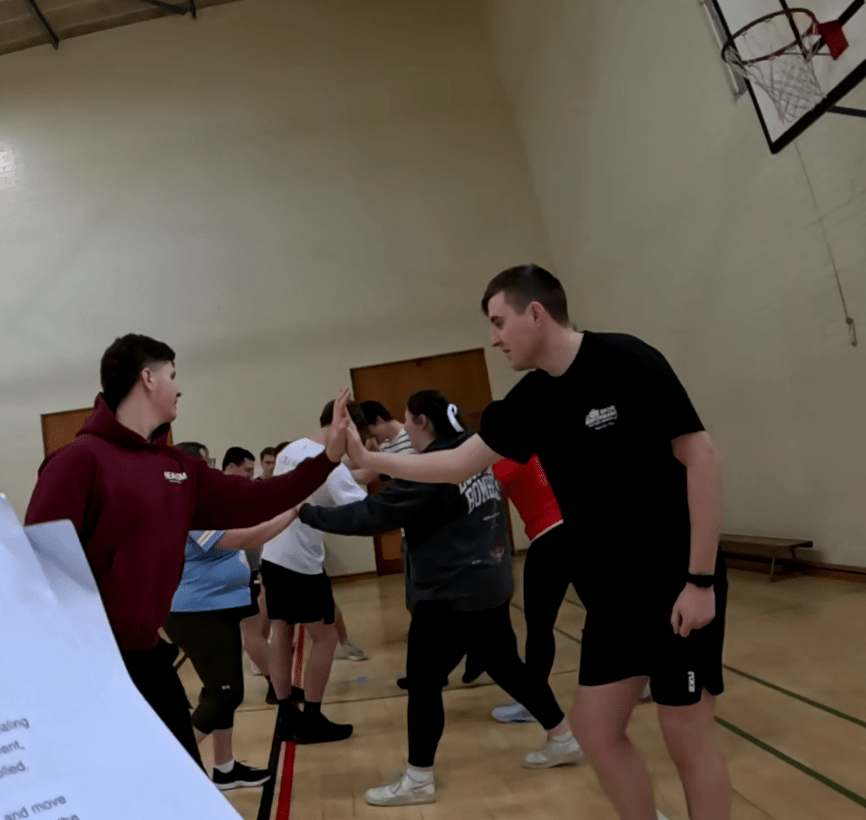
Warm-up exercise Fig3.
There was very positive feedback from the group, which began the learning cycle and the group continued with a structured physical drill. This is a command drill and there is descriptive narrative of the drill from the coach. The use of this movement drill, is to gain legwork interaction with the focus upon the palm movement. The group developed a formulation of base concepts of balance and reciprocal movement Fig3.
Direct Instruction: The coach explains to the players exactly what they need to do, when they should do it, and how to execute the move or formulate the skill.
The groups continued to palm push each other across the gym for the five minutes duration. This is an Aikido or Tai-Chi exercise for children to learn palm -push techniques and balance through reciprocal base movement where each person supports the other with their back and palm pressure while moving into each other’s area. To advance and to retreat through small movements and a palm focus of strength.
The group, was through the day, instructed from a variety of different coaching styles and involved interaction with forms of direct instruction and guided discovery.
The intensive is an active reflection of the drills that were invented for the group to engage in. They represent different aspects of coaching styles and a reflection of the groups interaction with the methodology of theoretical references of coaching styles and a timed reflection of the experiences has been converted to a table and a graph generated, which listed in figure 1.
Intensive 1 Total Time Duration 12.44 minutes
Intensive 2 total time Duration 35.54 minutes
Both these coaching sessions have been transcribed, and a copy of various different applications of how time was used to produce active learning by my coach group is displayed. Each coaching session or drill has been separated into different segments of the whole intensive time. Each one of these segments has been timed and the time recorded to describe aspects of instruction, movement and feedback used by the coaches and the time the group absorbed or transferred this to create active learning. This has been timed and a portrayal is displayed Fig.1.
Intensive 2 on the left Fig.1
below is a link to recording of intensive 2
Leon, Alex, Tyler, Riley, Emily, Rebekka (1).MP4
intensive 1 on the right. of table Fig.1 and the link to its recording is below.
The intensives are divided into relevant types of drills that the group interacted with and each drill type is detailed in different sections.
Each drill section shows a time duration for different command times, and player interaction times Fig.1.
Fig.1
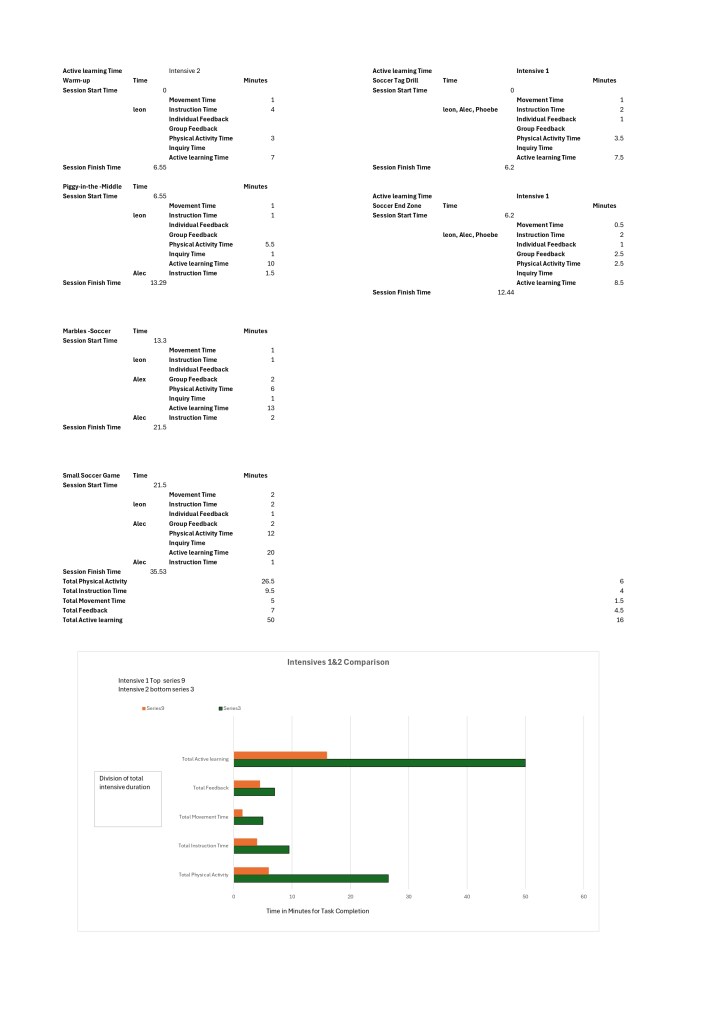
Fig.1.
Structured Drills: The table in figure 1 represents a feature of the structured drill and is expressed within the warm-up. Here a deal of instruction was necessary and though the physical activity time is small, the group enacted the drill.
Below is a link to the video segment of the warm-up Fig 11.
Fig.11
All the drills stay on a group medium, there is some group feedback as shown in the table which divides the intensive into each coaches instruction time and creates an aspect of how the active learning experienced is divided throughout the intensive.
The constructed drills used the boundaries of the gym well and created positive learning engagement from the different types of drills produced. Aspects of Command, Practice, Reciprocal, Convergant Discovery (Problem Solving) were used to create the drills for the coaching plan and intensive.
Feedback is produced throughout the drills by using changes in scoring during the drills to produce verbal interactions and to prompt cognitive interest. Open ended questioning is produced so the group can produce a variety of convergent thinking answers.
Intensive 1 was our first use of a coaching plan
Intensive 2 we designed our own with theoretical knowledge Fig.9.
The intensive 2 experience showed the expression of our theoretical learning within the spectrum canopy of teaching styles and showed we has progressed to create positive learning experiences for the group of participants.
A drills are examples of the use of convergent thinking, that the participants engaged in producing a passing kick, and then used the skill in the small soccer game. Fig.9, Fig.2.
The intensives were influential in the design of a constraints measure for each drill, organised from the intensive videos. The environmental constraints were measured with a stopwatch using the coaching plan serving as a guide to the designed training constraints that all players interacted with. The tables constructed identify the critical values of time, movement, and activity that produce different types of learning, Fig.1.
Types of Questioning
Question Coding
Convergent Question (CQ) – has only one specific answer.
E.g. What is your golf club grip?
Divergent Question (DQ) – have multiple possible answers.
E.g. Please explain your different strategy play approaches?
Questions are Closed (C), or Open (O).
E.g. Can you form 2 lines? Closed (C).
E.g. How many ways can you play the second-half of the game? Open (O).
Game Tactical (GT).
Content Related, technical game aspects (CR)
The transcribed documents have many of the questions statements marked for type of questions posed. Mainly C, and CR, but there are changes that create different cognitive aspects.
The table of feedback questions Fig.10, lists several types of open, or closed-ended questions, and learning derived types of feedback. The coaching questions compel a direct expression from the players. This can be divergent, and/or a convergent use of questioning, and feedback directed to create skill development (Teune et al., 2022).
This is an an example of using the intensive 1 video with open ended questioning Fig.12.
intensive 1 says objective (1)mov.mov
Fig. 12
This is a transcript from the video it contains some feedback and responses directed by myself:
Divergent or open ended questioning is used for efforts to create answers from players so they can gain insights into their own potential, there can be multiple answers to the open ended question and all help expression of learning and help create development.
Different questions are used to create responses from the players and to help organise their movement time, and create more active learning potentials. The feedback requires a response and is a more thinking game sense approach to applying constraints that focus learning potentials.
The constraints organised by the coaching plan to implement with the players during the intensive’s drills define the boundaries and shape emergent behaviour within the drill movements. It is the interaction of the players within these constraints that dictates the patterns that will create effective goal-directed activity, or the active learning time Fig.1. The questions and directions given create decision-making processes and cognitive patterns.
The transcript from Fig 11 warm-up shows the use of Instruction time and CR with C.
There is variability within the coaching plan drills of movement patterning, which means the cognitive and physical aspects of each individual’s functioning skills must seek personal ways to address the desired goals set by the coaching plans.
Task constraints influence the player’s learning intentions, and each stage of the coaching plan is a further manipulation of these constraints. Each drill contains different tasks, rules of play, and uses space and equipment differently, and creates experiences. The manipulation of task constraints creates proficiency, which the coach will set.
The players attune their movements through the physical/cognitive senses, and it is the coach’s endeavour for informational-movement coupling to be developed.
The coaching plan is my way of decomposing the passing task into manageable components to satisfy the use of interacting constraints of performance or the creation of a learning environment.
The drills attempt to improve the learner’s performance, and the manipulation of constraints encourages self-discovery that creates greater psychological engagement in sport. The focus of the drill constraints led approach is for the coach to design the range of drills/games/tasks on what intrinsic dynamics of overcoming learning rate limitations that might hinder the achievement of benefits from sport education (Ian Renshaw , Jia Yi Chow , Keith Davids & John Hammond, 2010).
Advantages of Training Exercises:
Players are kept interested and focused on the work at hand by the straightforward,
instructor-centred approach. The group is motivated extrinsically and accepts new direction and guidance without problems; they listen to the commands and execute the instructions.
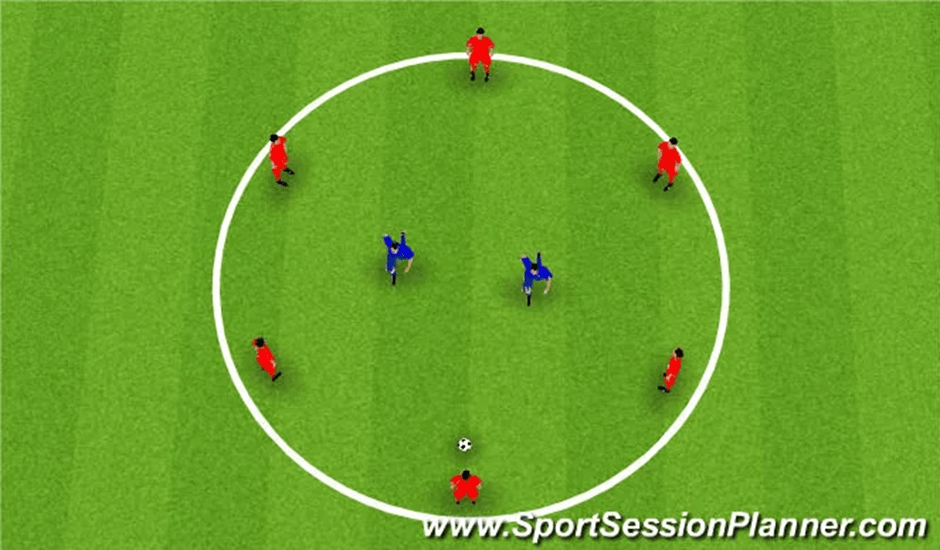
(Island Bay, 2025). Piggy-in-the middle Fig 2.
This is a change of coaching styles from the warm-up drill of command to reciprocal, convergent skill learning and emphasized game sense development and the reciprocation of ideas and skills in a small team environment.
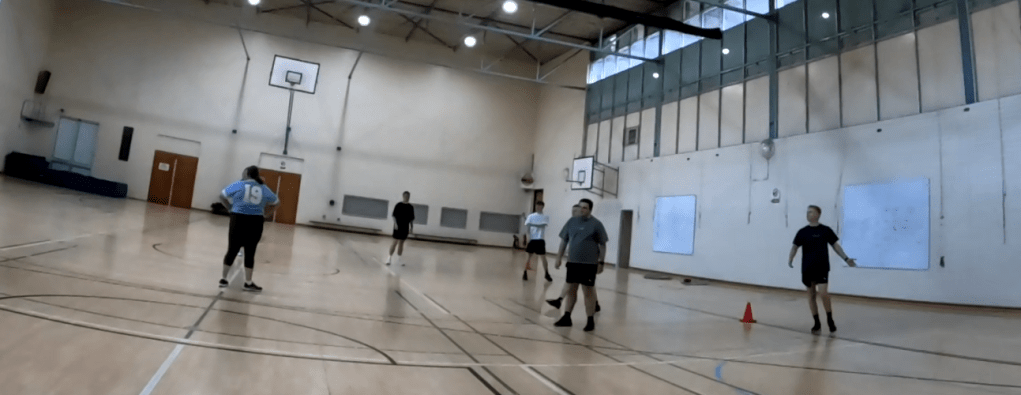
Piggy-in-the-middle Fig 4.
The drill piggy-in-the-middle facilitated skill development through organized practice by enabling coaches to watch player performance, assign precise, time-bound assignments, and provide feedback, which was a major task in observations of the team’s performance during the passing drill.
The soccer pebbles or marbles drill was a direct partner drill that fostered reciprocal coaching dynamics and centered upon a focus on direct partner passing. Fig 6.
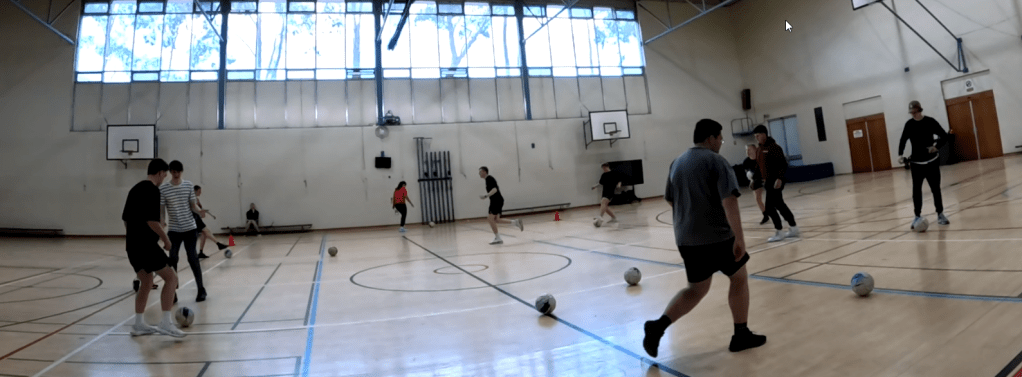
Soccer marbles Fig 6
These skills were then demonstrated in an invasion game drill to foster a more Convergent game-sense coaching use of game learning so a thinking player dimension is utilized in the small soccer game Fig 8.
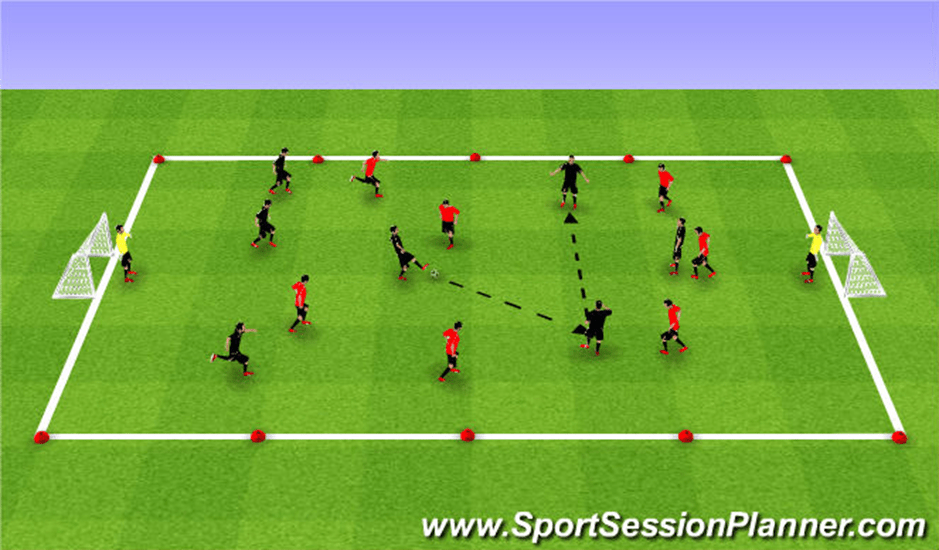
(Sport Session Planner, 2025.) Small Soccer game Fig. 7

Small Soccer Game Fig.8
Crucial Elements of Task-Based Coaching that were developed by the passing drills involved elements such as:
1 – Player Replication.
2 – Clearly defined tasks.
3 – Paying attention to motor skills.
By transferring feedback from the coach to the players, the C-Reciprocal Coaching Style used in the Marbles Soccer Fig 6.
There is a reciprocal partner role involved with this drill, and this allows the coach to concentrate on establishing standards and directing the peer-to-peer feedback process.
The players must watch, evaluate, and share comments with their partners, which promotes better performance comprehension, improved social and communication abilities, boosted self- esteem, and more player development for each individual from this reciprocal exercise.
Aspects of the different drill types is represented by the Fig.1 table, which shows how the active learning is divided between the coaches instruction and the participants physical activity time.
Divergent aspects of drill or coach plan changes promote new expression of how the player displays their skill levels which are all different within the group. This is the real creation of a fun engaging environment where all skill levels expressed development and game techniques in a mutually safe environment.
Observation and Feedback:
After watching the group complete the exercise, the coach offers prompts and helpful criticism based on the standards established by the coach. Here, each of us tried to establish a direction by giving instructions through the different exercises to maintain the flow and the direction of the guided discovery, and I thought I showed more feedback enquirers in Intensive 1, but more instruction time in Intensive 2 as shown in the table Fig1.
It is a use of a canopy of teaching structure that directed a more command sequence coaching style that utilized different learning values expressed by guided discovery and game sense motivations for learning flow and skill development (Chatoupis, 2009).
Improved self-reflection on my own teaching styles and the efficacy of the session preparation, was determined by the intensives success which promoted ongoing development and exploration through the internet for drills.
The coaching plan Fig 9. is improving the opportunity for developing interaction skills.
The coaching plans create targeted development that is used to refine certain tactical or technical elements of the game that are essential for player development, and newly created drills with specified restrictions.
These had to be flexible and targeted so the coaching plan can employ small-sided games and drills, which help players improve their technical, tactical, social, psychological, and physical skills.
Coaching Plan Fig 9.
Guided Discovery Style F
The coaching intensives produced theoretical problem solving as we created coaching plans to produce guided discovery and problem-solving aspects.
Forms of guided questioning is produced as part of the coaching plan to help the athlete produce convergent thought from the constraints.
The coach poses a series of questions rather than providing an example. The directions of a question or a training guide explanation to the group, or individual is producing convergent new thinking dimensions.
‘Can you form a staggered stance?’
Player discovery is created after considering the statement which the coach determines and expresses, the player uses their own logic to determine the best answer.
Internalization: This procedure makes learning more significant and long-lasting by assisting the player to remember and internalize the strategy and the logic behind it.

(Motion Blog, 2023)
Situational analysis and the use of direct utilization of skills and attained knowledge. A coach tries to enable the individual to recognize their potential and use their skills effectively.
The technique helps players become more adept at evaluating problems, looking into possible answers, and coming to judgments.
Developing communication skills was a good part of developing my coaching scenario and was continued throughout the rest of the day. To stay ready and be aware of changes, and show consistency to respond to players performance and feedback (Pill, 2017).
As a comparison between the two different intensives the total time for all the actual Physical Activity, Movement Time, Feedback Time, and Total Learning Time from the participants was calculated. The Total Instruction Time from the coach has been calculated.
The column chart generated from the data, Fig.1., shows a remarkable greater improvement for intensive 2 when compared from the results from the time calculation produced from Intensive 1 and is a definite improvement for coaching style learning.
The sum totals for instruction time, and physical learning time are greater when measured, and expressed as a table, for intensive 2.
The applied learning totals show greater physical activity expressed as convergent learning through guided discovery from my total instruction time calculation.
Control over the session and over the learning environment by altering task limitations, such as the size of the area we used for each drill, the size of the team, and the rules, in order to promote particular behaviours or provide players with interesting challenges. Starting group cooperation by taking an active role in the team members training, which was directed from our coaching plan.
This exercise provides coaches with the basic training of leadership knowledge, which could then be applied with their players to meet the applied learning outcomes.
 Sportsfolio